Lebanese Baklava, Mom’s Recipe Reimagined
This Lebanese Baklava is a generational recipe from my mom — the one she made for every holiday and every gathering that mattered. Her version was always perfectly flaky, fragrant from the sweetness of orange blossom water, and it’s the recipe that taught me how much love can be layered between sheets of filo.
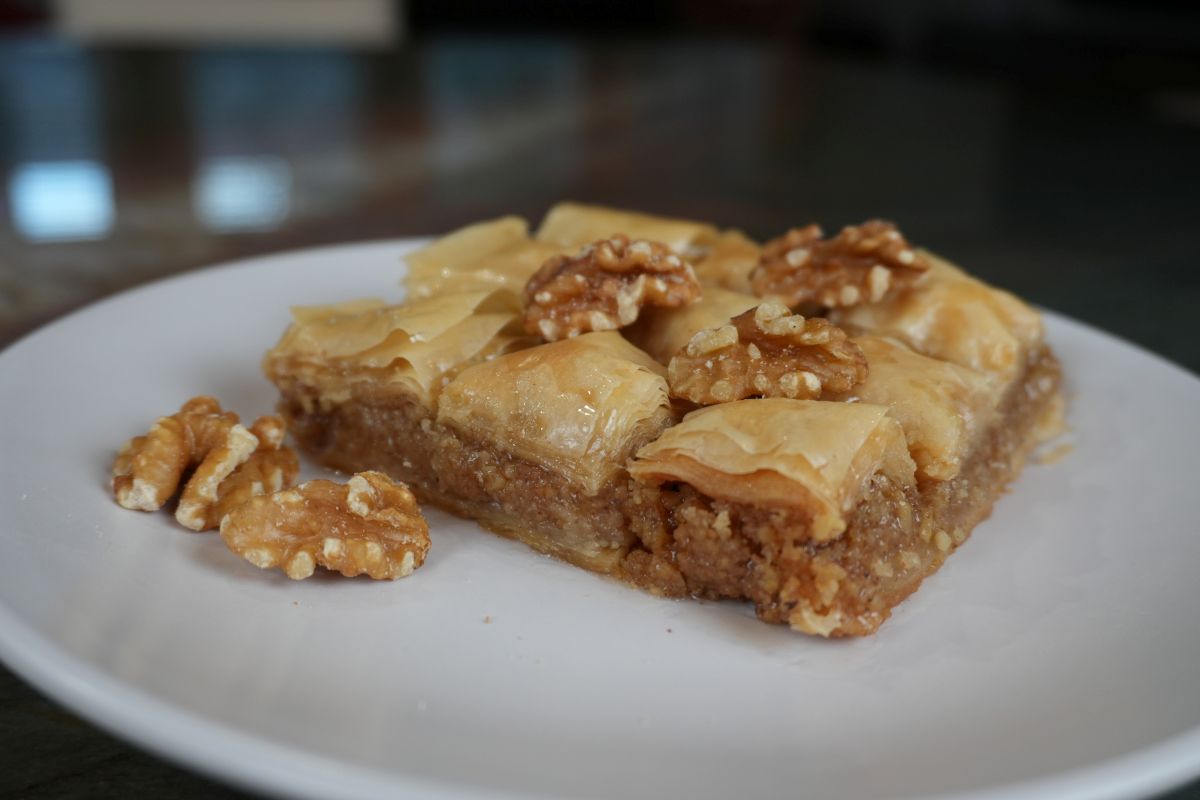
I’ve kept her recipe close, but I’ve added a few modern upgrades of my own. The biggest one? Pouring melted ghee over the baklava after it’s cut, instead of brushing every single layer. It gives you the same rich, buttery flavor and crisp texture — but with a more even finish and a beautifully golden top. It’s a small change that simplifies the process without losing any of the soul of her original recipe.
Ingredients at a Glance
Full ingredient list and instructions are in the recipe card below.
What Makes This Lebanese Baklava “Reimagined”
This baklava is still my mom’s at heart—layered with tradition, generosity, and the kind of joy that only comes from a recipe passed down with love. The ghee pour-over technique makes it more approachable for the everyday baker to make confidently for any occasion. The filling and the addition of orange blossom water to the ghee stay true to my mom’s recipe.
Tips for Success
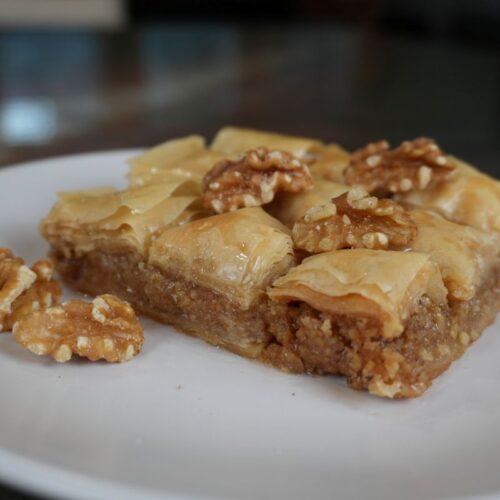
Lebanese Baklava, Mom’s Recipe Reimagined
Equipment
- 1 container heatproof
- 1 Vitamix Blender or food processor with pulse function
- 1 Henckels knife medium, sharppened
Ingredients
Orange Blossom Water Syrup
- 1 1/2 cups sugar
- 3/4 cup water
- 1/2 lemon juice from half a lemon
- 1 tbsp Orange Blossom Water
Prepare the Sugared Walnuts
- 4 cups walnuts
- 1 cup cane sugar
Lebanese Baklava Ingredients
- 1 pound phyllo dough room temperature
- 1 cup clarified butter (ghee) melted
- 1 tsp Orange Blossom Water add to the melted ghee
Instructions
Orange Blossom Water Syrup
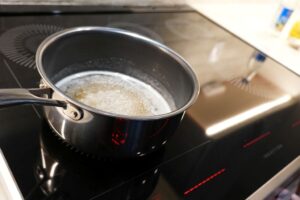 In a small heavy saucepan, combine sugar, water, and lemon juice. Bring to a boil over medium-high heat. Reduce the heat to low and simmer, stirring occasionally, for 5-7 minutes, until the sugar is dissolved and the syrup thickens slightly.
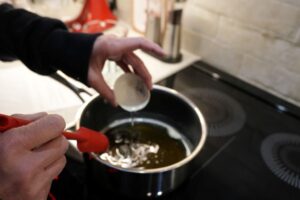 Remove from the heat and add the orange blossom water. Pre-measure to avoid extra spills into your syrup.
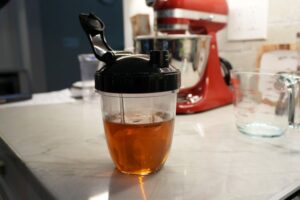 Pour the syrup into a heatproof container and refrigerate until completely cool.
Prepare the Sugared Walnuts
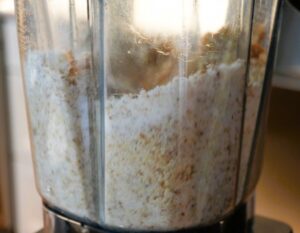 Combine the walnuts and sugar in a food processor or blender and pulse-grind until finely mixed.
Make the Lebanese Baklava
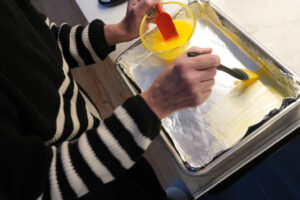 Preheat the oven to 325℉. Line a 9 x 13 pan with foil and brush the bottom with ghee.
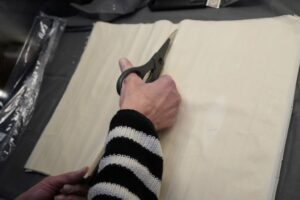 Open the two sleeves of phyllo dough, unroll them, and cut them to fit the 9 x 13 pan.
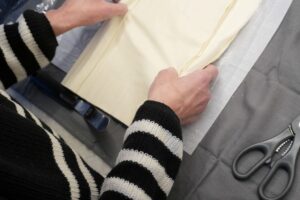 Divide the dough in half. Place the first half, cut edges down on the bottom of the pan. Cover the second half with parchment paper and a towel to keep it from drying out.
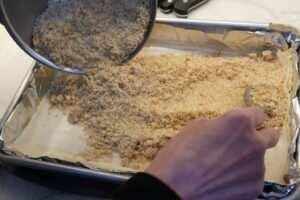 Spread the sugared walnuts evenly over the phyllo dough.
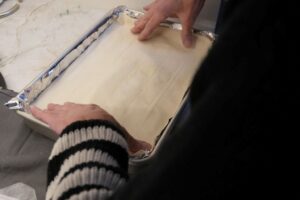 Lay the remaining sheets of phyllo dough over the nuts. Be careful to keep the top sheets intact to create a beautiful baklava top.
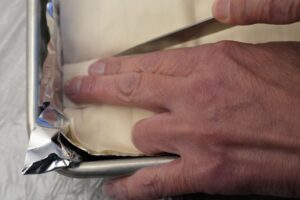 Using a sharp knife, cut the baklava into squares by making 5 lengthwise cuts and 9 crosswise cuts, holding the phyllo sheets down with your other hand as you cut carefully.
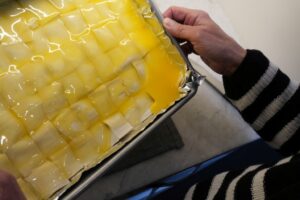 Pour the melted ghee and orange blossom water mixture evenly over the baklava. Let it sit for 5-6 minutes to soak into the phyllo dough layers.
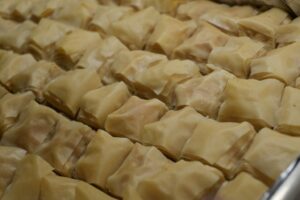 Bake until the top is golden brown, about 60 minutes. Rotate the pan halfway through baking.
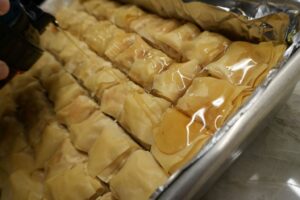 Remove the baklava from the oven and immediately pour the chilled syrup evenly over the top. Allow it to cool at room temperature for several hours before serving.
Notes
- Nuts: pistachios or pecans
- Butter: instead of ghee, use a high-fat, low-moisture butter.
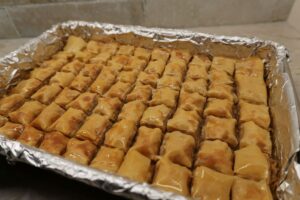
Storage & Serving
- Serve Lebanese baklava at room temperature to allow the syrup to absorb into the phyllo dough.
- Store it in the refrigerator for up to 10 days.
- Baklava freezes beautifully for up to three months. Let it defrost in the refrigerator the night before serving. Or, if you’re like me and can’t resist a piece for dessert, set a piece on a plate on the counter.
The Shop
Did you make this recipe?
I’d love to hear how your Lebanese Baklava turned out. Whether you’re packaging it in ribboned boxes or savoring a piece alongside your favorite coffee, I hope this reimagined version sparks new traditions in your home, just as it has ours. Leave a comment below.
Craving more? Follow along with me on Instagram, Facebook, and Pinterest for more delicious recipes & meal ideas!